Facebook
 X
X
 Pinterest
 Copy Link
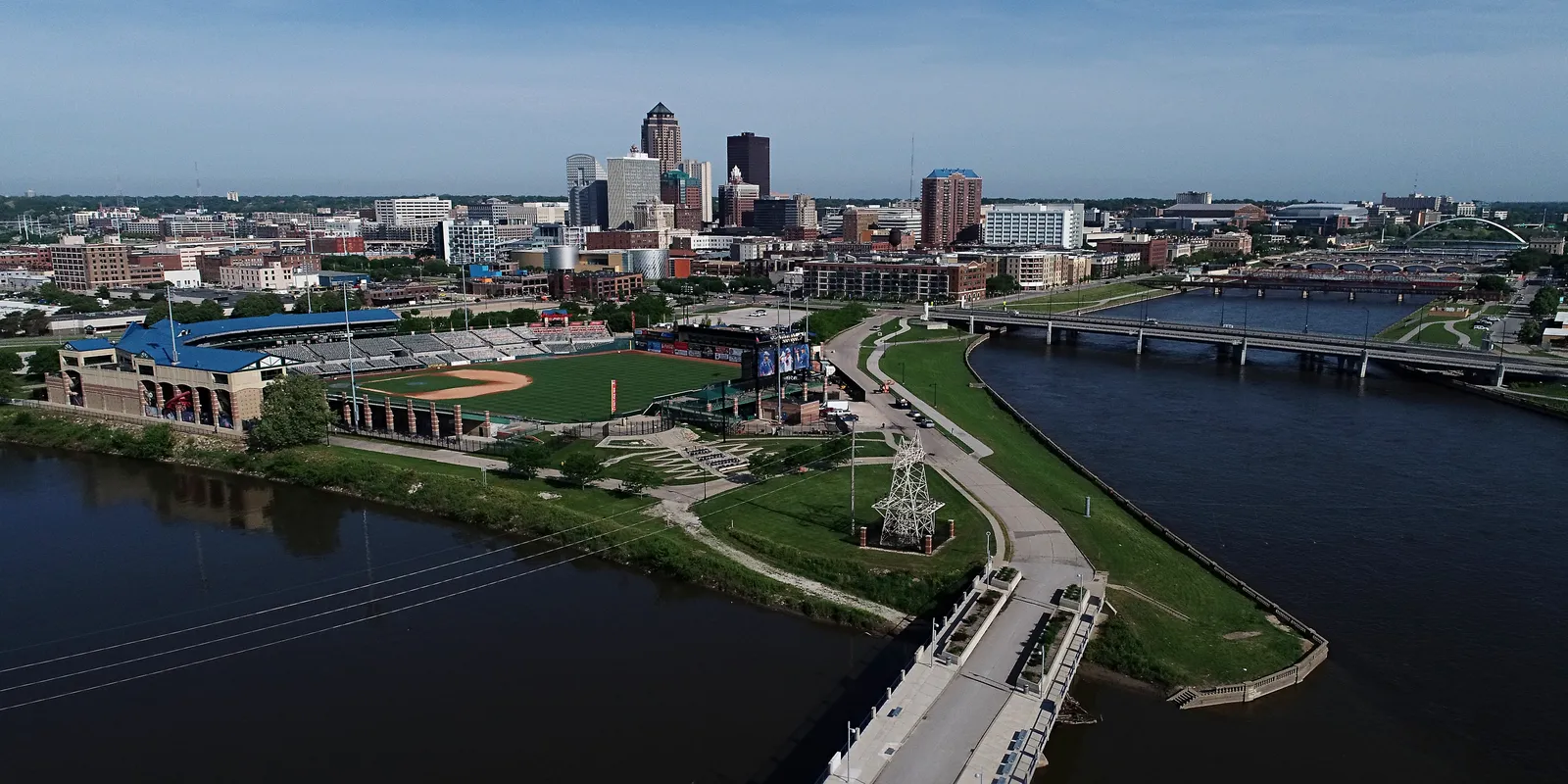
Every once in a while, a national real estate report comes out that makes me think: “Yep. This is one of the reasons I love living and working in the Des Moines area.”
The latest Realtor.com Metro Report Cards ranked the Des Moines metro as the top-performing metro in the country for a combination of homebuilding and affordability.
And it wasn’t just a good grade. Des Moines received an A+.
Only two metros in the country received an A+—Des Moines and Raleigh—with Des Moines edging out Raleigh for the top overall score.
Now, if you live here, this probably doesn’t mean you’re suddenly thinking, “Wow, Cody, housing is so cheap!”
I get it. Homes aren’t cheap. Mortgage rates aren’t exactly what they were a few years ago. And depending on your budget, finding the right home can still be a challenge.
But when you zoom out and compare Des Moines to what’s happening in other parts of the country, there are some pretty encouraging things happening here.
So, Why Did Des Moines Get an A+?
Realtor.com’s report looked at the 100 largest metropolitan areas in the country and graded them on two major factors: Affordability and Homebuilding. Each category carried equal weight.
For affordability, the report looked at things like how much of a typical earner’s income goes toward a mortgage payment on a median-priced home and how much of the available housing inventory is affordable to households at different income levels.
For homebuilding, Realtor.com looked heavily at how many new homes are being permitted relative to the metro’s population, along with how much more expensive newly built homes are compared with existing homes.
Des Moines scored:
88.3 for affordability
78.4 for homebuilding
83.4 overall
That was enough for the highest overall score among the 100 metros studied.
So what does that actually mean for someone who lives here or is thinking about moving here? Let’s break it down.
1. We’re Actually Building Homes
This might be the most important part of the entire report. The Des Moines metro’s permit-to-population ratio was 1.85.
In simple terms, Realtor.com says the metro is permitting about 85% more new homes relative to its population than would be expected based on the national average.
That’s significant. One of the biggest housing problems across the United States is that we’re simply not building enough homes.
When demand grows faster than the supply of homes, prices tend to face upward pressure. So while building more homes doesn’t magically make housing inexpensive overnight, adding supply gives buyers more options and can help create a healthier market over time.
And we’re seeing that growth throughout the Des Moines metro. Communities throughout the surrounding metro continue to add new neighborhoods, townhomes, single-family homes and other types of housing.
That’s important because growth requires housing.
2. Des Moines is Still Relatively Affordable Compared with Other Major Metros
Here’s another number from the Realtor.com report that caught my attention.
The median-priced home in the Des Moines metro was about $349,903, while the median earner’s annual income was about $86,600.
Realtor.com calculated that the typical earner would spend approximately 27.5% of their income on the monthly payment for that median-priced home.
That doesn’t mean every Des Moines-area buyer is spending only 27.5% of their income on housing.
Your actual payment depends on your purchase price, down payment, interest rate, property taxes, insurance and other factors.
But it does provide some useful context.
Des Moines isn’t operating in a vacuum. We’re competing for jobs, businesses and residents with cities all across the country.
And compared with many larger metros, your dollar can still go further here. That’s one of the reasons people continue to move to Central Iowa.
3. We’re Not Just Building More—We’re Building in a Growing Region
The other thing I think is easy to overlook is why we’re building.
People are moving here. Businesses are growing here. Communities are expanding. And that creates demand for housing.
The Des Moines metro has room to grow, particularly into surrounding communities, while still maintaining relatively manageable commutes compared with many larger metropolitan areas.
That’s a pretty valuable combination.
You can live in a community like Pleasant Hill, Altoona, Ankeny, Waukee, Grimes or Johnston and still have access to the broader Des Moines metro.
And you don’t necessarily have to choose between having a little more space and being close to the things you need.
4. There is Still a Catch: New Construction isn’t Cheap
Now here’s where I don’t want to oversell the story. The Realtor.com report also identified a weakness in the Des Moines market: New construction carries a 23.4% price premium compared with existing homes.
In other words, buying a brand-new home can cost significantly more than buying an existing home. And that can be a major hurdle for first-time and lower-budget buyers.
That’s why we’re seeing more attention on things like:
-Townhomes
-Duplexes
-Smaller-lot homes
-More efficient home designs
-“Missing middle” housing
-Smaller new-construction footprints
The goal is to create new housing that works for more price points. And that’s important.
Because adding a million-dollar home to a community doesn’t necessarily solve the problem for someone trying to buy their first $250,000 house. We need housing at different price points.
5. More Inventory is Good for Buyers
This is another area where the local numbers are encouraging.
According to the Des Moines Area Association of REALTORS®, the metro had 4,702 active listings in August 2026, an 11.8% increase from August 2025. Median sales price was $319,725, up 5.5% from a year earlier. Homes spent an average of 50 days on the market.
What does that mean?
Buyers have more choices than they did a year ago.
That doesn’t mean buyers suddenly have all the leverage in every price range or every neighborhood. Real estate is incredibly local, and conditions can vary significantly by price point and community.
But more inventory generally means buyers have more opportunities to find the right house rather than feeling like they have to jump on the first acceptable property they see. And that’s a good thing.
6. This is Why I Think Des Moines Has a Lot Going for It
I’ve spent a lot of time talking about the Des Moines metro since getting into real estate.
One thing I keep coming back to is that our market doesn’t need to be perfect to be a great place to live.
We have challenges. Housing affordability is still a concern. Interest rates matter. New construction can be expensive. Some buyers are still struggling to save enough money for a down payment. And depending on your budget, finding the right home can absolutely take some patience.
But look at the bigger picture.
We’re building. We’re growing. We’re adding infrastructure. We’re attracting employers. We’re adding housing choices.
And we’re doing it in a region where home prices are still relatively attainable compared with many major U.S. metros.
That’s a pretty good combination.
What Does This Mean if You’re Thinking About Buying?
If you’re currently renting and wondering whether you should eventually buy a home, I wouldn’t look at this report and think: “I need to buy a house immediately.”
That’s not the takeaway.
Instead, I’d look at it as another reason to pay attention to what’s happening in the Des Moines metro.
If you want to buy a home in the next year or two, start learning now.
Talk to a lender. Figure out what your budget could look like. Learn about down payment options. Explore different communities. Start paying attention to what homes are actually selling for, not just what they’re listed for. And talk to a real estate agent who can help you understand what you’re seeing.
You don’t have to be ready to write an offer tomorrow. You just need to start getting informed.
And If You’re Already a Homeowner…
This is good news for you, too.
A growing metro with continued housing construction, employment opportunities and population growth creates a healthy foundation for a community.
That doesn’t mean your house is guaranteed to appreciate by a certain amount. Real estate doesn’t work that way.
Your home’s value will depend on its location, condition, the surrounding neighborhood, market conditions and plenty of other factors.
But being part of a growing metro with continued investment and housing demand is certainly something I like seeing as a homeowner and Realtor.
The Bottom Line
I’m obviously biased toward Des Moines. I live here, work here and spend a lot of my time helping people buy and sell homes here.
But you don’t have to take my word for it.
A national real estate publication just looked at the 100 largest metro areas in the country and gave Des Moines an A+ for homebuilding and affordability. That’s worth paying attention to.
Does it mean housing is cheap? No. Does it mean every buyer can afford every home? Definitely not. Does it mean our housing market doesn’t have challenges? It does.
But it does tell us something important: Des Moines is continuing to build, grow and create opportunities for people who want to put down roots here. That’s one of the things I love most about this area. We’re growing, but we’re still Iowa.
Thinking About Buying in the Des Moines Metro?
If you’re considering buying your first home, moving to the Des Moines area, or simply trying to figure out what your options look like, I’d be happy to help.
You don’t need to have your budget figured out. You don’t need to know exactly where you want to live. And you certainly don’t need to be ready to buy tomorrow.
Let’s have a conversation.
We can talk about your goals, your timeline, different communities, and what the current market could mean for you.
I’m here to help you make sense of it.
Cody Voga—Your Friend in Real Estate.
515-720-1714
cody@c21sre.com
@CodyVogaRealtor

Cody Voga